The year after my jaywalking experiment, I moved to Inglewood to take a job teaching young people. I entered a community that was riled up.
The month before I moved in, at a gas station just down the street, a man had videotaped a police officer beating up a teenage boy in handcuffs.
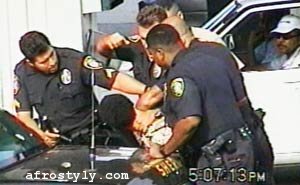
The videotape shows an officer picking up the boy from behind, who appears limp, and then slamming him against the hood of his patrol car. He then turns the boy around and punches the boy in the face with a closed fist.
The boy was Donovan Jackson, a special-education student at the local high school. He had been diagnosed with an auditory processing delay, which meant that it was difficult for him to follow verbal instructions.
Donovan had ridden to the gas station with his dad, then went inside the station to buy a bag of chips. Police officer Carlos Lopez saw that the parked car's license plate tags were expired and approached Donovan's father, where he proceeded to find that his driver's license was suspended. Officer Lopez was arresting Donovan's father when Donovan returned with his chips. (Donovan's father, who was never accused of resisting, suffered injured ribs in the arrest.)
Officer Lopez yelled instructions at Donovan, who didn't respond and just stood in place looking at his father being arrested. The officer finished arresting Donovan's dad and then attempted to force Donovan into the police car. Officer Lopez claims that Donovan swung at him. Two more officers arrived at this moment, having been called by Officer Lopez to provide backup to the arrest. These officers, Jeremy Morse and Bijan Darvish, grabbed Donovan by the arms and forced him to the ground. As he fell to the ground, Donovan, who was much smaller than the officers arresting him, flailed his arms, grabbing at Officer Morse's shirt and leaving a scratch on his face. Officer Davish claims that Donovan also grabbed his uniform. Officer Darvish then punched Donovan twice in the face. Two more officers arrived at the scene (5 officers total now for a suspended licence!), one of them, Officer Antoine Crook, hitting Donovan with a flashlight in the process, and they handcuffed the teenager. Donovan claims that the officers dragged him around the ground by the chain he wore on his neck, and that he was unable to breathe and nearly unconscious by the time he was handcuffed.
Several observers were screaming at the police to stop beating the teenager, which attracted a crowd. One of them, Mitchell Crooks, heard the noise and grabbed a camcorder to began videotaping the beating he was observing. At the start of the videotape, you can see Officer Morse pull the handcuffed Donovan up to his feet, who is not moving and appears limp, and then slam him face-first against the hood of his police car.

Officer Morse claims that at this point Donovan grabs his testicles, though that is not apparent on the video tape. Officer Morse then held Donovan's neck with his left hand and punched Donovan in the face with his right hand. He then appears to start choking Donovan, at which point the other officers intervene, one of them physically pulling Officer Morse off of Donovan.


It turned out that this was not an isolated incident. A local woman claimed that Officer Morse had assaulted her earlier in the year. The LA Times reported more than a dozen abuse-of-force incidents that the Inglewood Police Department had been involved in in recent years, often resulting in broken noses and teeth getting knocked out. Many of the cases involved people who had not committed any crime, but were accused of police of "interfering with police business" or "contempt of cop". Several of the people beaten by Inglewood police officers were local schoolteachers.
Officer Morse, who was videotaped slamming the handcuffed Donovan against the car and punching him in the face, was fired.
Officer Darvish, Morse's partner who later admitted punching Donovan in the face twice (not on tape), was suspended 10 days for filing a false incident report which failed to acknowledge any of the beating. He continued to work as an officer in good standing with the Inglewood PD.
Officer Crook, who admitted hitting Donovan with a flashlight (not on tape), was suspended 4 days and lost his job as an officer, being reassigned as a civilian jailer.
Mitchell Crooks, the man who videotaped the incident, was tracked down by police and arrested a week later by officers on a 3-year-old warrant for misdemeanor DUI and hit-and-run. Though he had previously been stopped by police several times for jaywalking and traffic violations, this was the first time that he was arrested, extradited back to Placer County, and forced to face charges.
When the courts got involved, it really got interesting.
Officer Morse, represented by elite lawyers who moved the trial to Torrance (a middle-class community miles from Inglewood) and whittled down the jury pool down to a single Black juror, managed to get a hung jury (7 in favor of conviction, 5 against) in his criminal trial. Officer Morse was never convicted of any crime, despite the clear video evidence and testimony of other officers. In a civil case, Officer Morse sued the City of Inglewood for firing him and claimed anti-White racial discrimination, because Officer Crook wasn't fired. He won his lawsuit and was awarded $1.6 million.
Officer Darvish was found not guilty of filing a false report. He also sued the city, like Officer Morse claiming that his 10-day suspension was the result of anti-White racial discrimination. He also won and was awarded $810,000. He still works as an officer.
Officer Crook and one other officer were granted immunity for their grand jury testimony against Officer Morse.
Donovan Jackson's family sued the City of Inglewood and the Inglewood PD in Federal Court for violations of Donovan's civil rights. They settled out-of-court for an undisclosed amount.
Mitchell Crooks, the witness who videotaped the beating, served 7 months in jail for his arrest on the unrelated charges.
The City of Inglewood later sued its own lawyers for losing so many cases so badly.
This was the Inglewood neighborhood that I walked into. From this high-profile case, citizens learned (or had confirmed), that:
* The police, who had been beating them for years, could continue to get away with it even if they got caught on videotape.
* Police officers are privileged enough that even when doing something wrong, they can still come out on top.
* Doing the right thing and going to the police with evidence might not be in your own best interest.
* The City of Inglewood is completely incompetent in all matters.
The problems with police brutality in Inglewood did not end. In 2008, the LA Times published yet another report on excessive force by the Inglewood PD, including 11 lethal killings of citizens in 5 years, half of which were unarmed. One especially egregious case involved a mentally ill man who repeatedly asked officers if he could pull up his slipping pants, then was shot and killed when he reached to pull them up. Another involved a man shot in the back who had run away when officers stopped him for riding his bike on the sidewalk. In 2010, the US Justice Department found significant flaws in how the Inglewood PD handled use-of-force incidents. Unfortunately, excessive force in the Inglewood PD continues to this day.
The month before I moved in, at a gas station just down the street, a man had videotaped a police officer beating up a teenage boy in handcuffs.
The videotape shows an officer picking up the boy from behind, who appears limp, and then slamming him against the hood of his patrol car. He then turns the boy around and punches the boy in the face with a closed fist.
The boy was Donovan Jackson, a special-education student at the local high school. He had been diagnosed with an auditory processing delay, which meant that it was difficult for him to follow verbal instructions.
Donovan had ridden to the gas station with his dad, then went inside the station to buy a bag of chips. Police officer Carlos Lopez saw that the parked car's license plate tags were expired and approached Donovan's father, where he proceeded to find that his driver's license was suspended. Officer Lopez was arresting Donovan's father when Donovan returned with his chips. (Donovan's father, who was never accused of resisting, suffered injured ribs in the arrest.)
Officer Lopez yelled instructions at Donovan, who didn't respond and just stood in place looking at his father being arrested. The officer finished arresting Donovan's dad and then attempted to force Donovan into the police car. Officer Lopez claims that Donovan swung at him. Two more officers arrived at this moment, having been called by Officer Lopez to provide backup to the arrest. These officers, Jeremy Morse and Bijan Darvish, grabbed Donovan by the arms and forced him to the ground. As he fell to the ground, Donovan, who was much smaller than the officers arresting him, flailed his arms, grabbing at Officer Morse's shirt and leaving a scratch on his face. Officer Davish claims that Donovan also grabbed his uniform. Officer Darvish then punched Donovan twice in the face. Two more officers arrived at the scene (5 officers total now for a suspended licence!), one of them, Officer Antoine Crook, hitting Donovan with a flashlight in the process, and they handcuffed the teenager. Donovan claims that the officers dragged him around the ground by the chain he wore on his neck, and that he was unable to breathe and nearly unconscious by the time he was handcuffed.
Several observers were screaming at the police to stop beating the teenager, which attracted a crowd. One of them, Mitchell Crooks, heard the noise and grabbed a camcorder to began videotaping the beating he was observing. At the start of the videotape, you can see Officer Morse pull the handcuffed Donovan up to his feet, who is not moving and appears limp, and then slam him face-first against the hood of his police car.

Officer Morse claims that at this point Donovan grabs his testicles, though that is not apparent on the video tape. Officer Morse then held Donovan's neck with his left hand and punched Donovan in the face with his right hand. He then appears to start choking Donovan, at which point the other officers intervene, one of them physically pulling Officer Morse off of Donovan.

It turned out that this was not an isolated incident. A local woman claimed that Officer Morse had assaulted her earlier in the year. The LA Times reported more than a dozen abuse-of-force incidents that the Inglewood Police Department had been involved in in recent years, often resulting in broken noses and teeth getting knocked out. Many of the cases involved people who had not committed any crime, but were accused of police of "interfering with police business" or "contempt of cop". Several of the people beaten by Inglewood police officers were local schoolteachers.
Officer Morse, who was videotaped slamming the handcuffed Donovan against the car and punching him in the face, was fired.
Officer Darvish, Morse's partner who later admitted punching Donovan in the face twice (not on tape), was suspended 10 days for filing a false incident report which failed to acknowledge any of the beating. He continued to work as an officer in good standing with the Inglewood PD.
Officer Crook, who admitted hitting Donovan with a flashlight (not on tape), was suspended 4 days and lost his job as an officer, being reassigned as a civilian jailer.
Mitchell Crooks, the man who videotaped the incident, was tracked down by police and arrested a week later by officers on a 3-year-old warrant for misdemeanor DUI and hit-and-run. Though he had previously been stopped by police several times for jaywalking and traffic violations, this was the first time that he was arrested, extradited back to Placer County, and forced to face charges.
When the courts got involved, it really got interesting.
Officer Morse, represented by elite lawyers who moved the trial to Torrance (a middle-class community miles from Inglewood) and whittled down the jury pool down to a single Black juror, managed to get a hung jury (7 in favor of conviction, 5 against) in his criminal trial. Officer Morse was never convicted of any crime, despite the clear video evidence and testimony of other officers. In a civil case, Officer Morse sued the City of Inglewood for firing him and claimed anti-White racial discrimination, because Officer Crook wasn't fired. He won his lawsuit and was awarded $1.6 million.
Officer Darvish was found not guilty of filing a false report. He also sued the city, like Officer Morse claiming that his 10-day suspension was the result of anti-White racial discrimination. He also won and was awarded $810,000. He still works as an officer.
Officer Crook and one other officer were granted immunity for their grand jury testimony against Officer Morse.
Donovan Jackson's family sued the City of Inglewood and the Inglewood PD in Federal Court for violations of Donovan's civil rights. They settled out-of-court for an undisclosed amount.
Mitchell Crooks, the witness who videotaped the beating, served 7 months in jail for his arrest on the unrelated charges.
The City of Inglewood later sued its own lawyers for losing so many cases so badly.
This was the Inglewood neighborhood that I walked into. From this high-profile case, citizens learned (or had confirmed), that:
* The police, who had been beating them for years, could continue to get away with it even if they got caught on videotape.
* Police officers are privileged enough that even when doing something wrong, they can still come out on top.
* Doing the right thing and going to the police with evidence might not be in your own best interest.
* The City of Inglewood is completely incompetent in all matters.
The problems with police brutality in Inglewood did not end. In 2008, the LA Times published yet another report on excessive force by the Inglewood PD, including 11 lethal killings of citizens in 5 years, half of which were unarmed. One especially egregious case involved a mentally ill man who repeatedly asked officers if he could pull up his slipping pants, then was shot and killed when he reached to pull them up. Another involved a man shot in the back who had run away when officers stopped him for riding his bike on the sidewalk. In 2010, the US Justice Department found significant flaws in how the Inglewood PD handled use-of-force incidents. Unfortunately, excessive force in the Inglewood PD continues to this day.


No comments:
Post a Comment